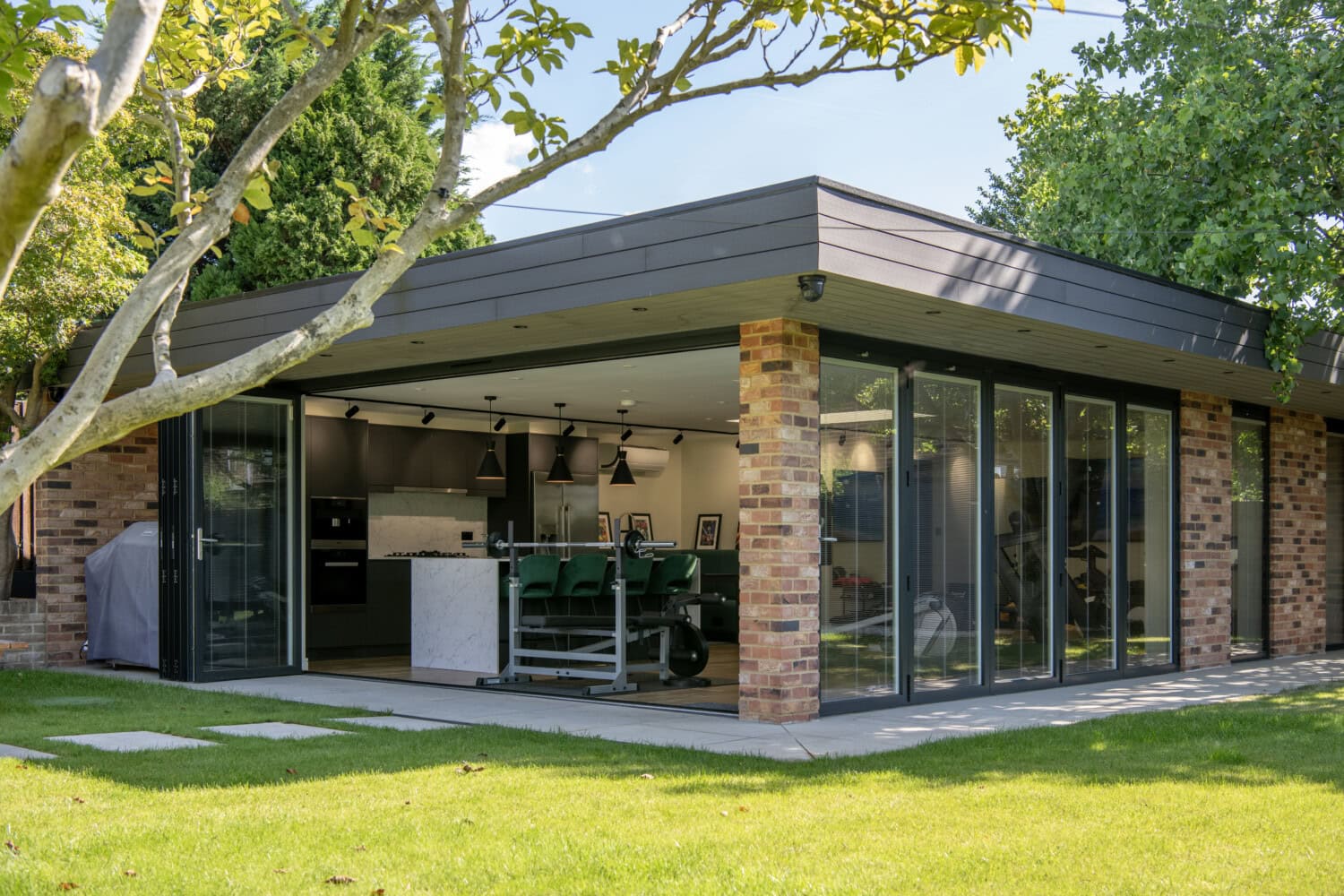
Stage 1: Define the Purpose and Layout
Before you start building your garden room, take a step back and picture how you’ll actually use the space day to day. This isn’t just planning, it’s setting the foundation for every decision that follows.
Questions to answer early
- Will it be used all year or seasonally?
- How many people will use it at once?
- What furniture needs to fit inside?
- Do you need heating, power, or water?
These answers influence the size, insulation level, and glazing choices. A workspace, for example, benefits from more wall space, while a social area often focuses on wide door openings.
When you build your own garden room, layout decisions at this stage prevent compromises later.
Stage 2: Check Permissions and Regulations
It’s tempting to jump straight into the build, but this is the stage where a bit of diligence pays off. Getting familiar with the rules early helps you avoid redesigns, delays, or even being asked to undo completed work.
Garden rooms often fall within permitted development, but that depends on specific details. Things like size, placement, and how you plan to use the space can all affect whether you need approval.
Key points to review
- Overall height and footprint
- Distance to boundaries
- Intended use of the space
- Electrical and plumbing requirements
Many DIY garden room projects fall within permitted development, but this is not guaranteed. A quick check with your local authority keeps everything on track.

Stage 3: Choose Your Build Method
There are several ways to approach a self-build garden room, and each affects cost, speed, and complexity.
Main routes
- Flat pack kits with pre-cut panels
- Fully bespoke timber builds
- Hybrid systems with premanufactured features
If your priority is efficiency, a kit-based system can simplify the process, whereas if flexibility is more important, a custom build gives greater control. For those planning to build a garden room without prior experience, a structured system often reduces risk.
Stage 4: Plan Your Glazing Early
One of the most common mistakes in a DIY garden room project is leaving doors and windows too late. Glazing sizes affect structural openings, so these need to be confirmed before construction begins.
Door options to consider
- French doors for a balanced, symmetrical look
- Bifold doors for wider openings
Window combinations
- Casement windows for airflow
- Fixed windows for uninterrupted light
Choosing pre-made or stock bifold doors is one of the easiest ways to accelerate your build, particularly if you’re working to a tight or fixed schedule. With Express Bi-folds Direct’s 5-working-day turnaround on all garden room products, you can avoid long lead times and keep your project moving forward with confidence.

Stage 5: Set a Realistic Budget
A well-planned budget for a DIY garden room is about more than just materials; it’s about understanding the full scope of your project from start to finish. Taking the time to map out all potential costs will help you avoid surprises and keep your build on track.
Make sure you account for:
- Foundations and base work
- Structure and insulation
- Doors and windows
- Electrical installation
- Interior finishes
It’s also essential to build in a contingency fund. Even the most carefully planned projects can uncover unexpected costs once work begins, so having a buffer in place gives you the flexibility to adapt without derailing your progress.
Stage 6: Prepare the Site
Before any structure goes up, the groundwork needs to be right. A well-prepared site sets the tone for the entire build and helps prevent issues further down the line.
Checklist
- Clear vegetation and debris
- Level the area
- Install drainage if required
- Choose a base system
A solid base is critical when building a garden room, as it supports everything above it.

Stage 7: Interior Planning and Designing
Once the structure is planned, the focus shifts to how the space will look, feel, and function day to day. This is where your garden room really comes to life.
Consider
- Lighting layout
- Flooring type
- Heating options
- Storage solutions
A thoughtfully designed interior doesn’t just improve comfort; it ensures your build-your-own garden room delivers lasting value, making the space practical, enjoyable, and suited to how you’ll actually use it.
Stage 8: Build and Assemble
This is the stage where everything starts to take shape. With the groundwork complete and materials ready, your planning now turns into visible progress.
Order of work
- Install the base
- Assemble the frame
- Add insulation and external cladding
- Fit the roof
- Install glazing
- Complete internal finishes
Following the correct sequence is key to a smooth build. It keeps the project efficient, reduces the risk of mistakes, and helps you avoid unnecessary rework as each stage builds logically on the last.

Expert Insight from Express Bi-folds Direct
Managing Director Steve Bromberg explains:
“The planning stage is where most garden room projects succeed or struggle. When sizes, materials, and glazing are confirmed early, the build becomes far more straightforward, and the end result reflects that attention to detail.”
At Express Bi-folds Direct, all our aluminium doors and windows are precision engineered to deliver strong thermal performance, security, and long term durability. Designed with self-build projects in mind, they are straightforward to install and built to perform reliably year after year.
With pre-made products available in as little as 5 working days, you can keep your project on schedule and start enjoying your new garden room sooner.
FAQs
They are often used interchangeably. Both refer to projects where the homeowner manages or completes the build rather than using a full installation service.
Early in the planning stage. Sizes must be confirmed before structural openings are built.
Yes, many people successfully complete a build your own garden room project. However, specialist tasks like electrics may require qualified professionals.
Yes, stock bifold doors are a good option for standard openings and quicker timelines.
Insulation, double glazing, and heating all contribute to year-round use.
A DIY garden room is as much about planning as it is about construction. By following a structured checklist, confirming glazing early, and choosing reliable materials, you can build a garden room that works exactly as intended.
To understand how pre-made aluminium bifold and French doors, as well as fixed & casement windows, fit into your vision, check out our range online or come down to the showroom for a chat with our expert team of advisors.
Taking the time to prepare properly ensures your DIY garden room project runs smoothly and delivers a space you can use every day.